

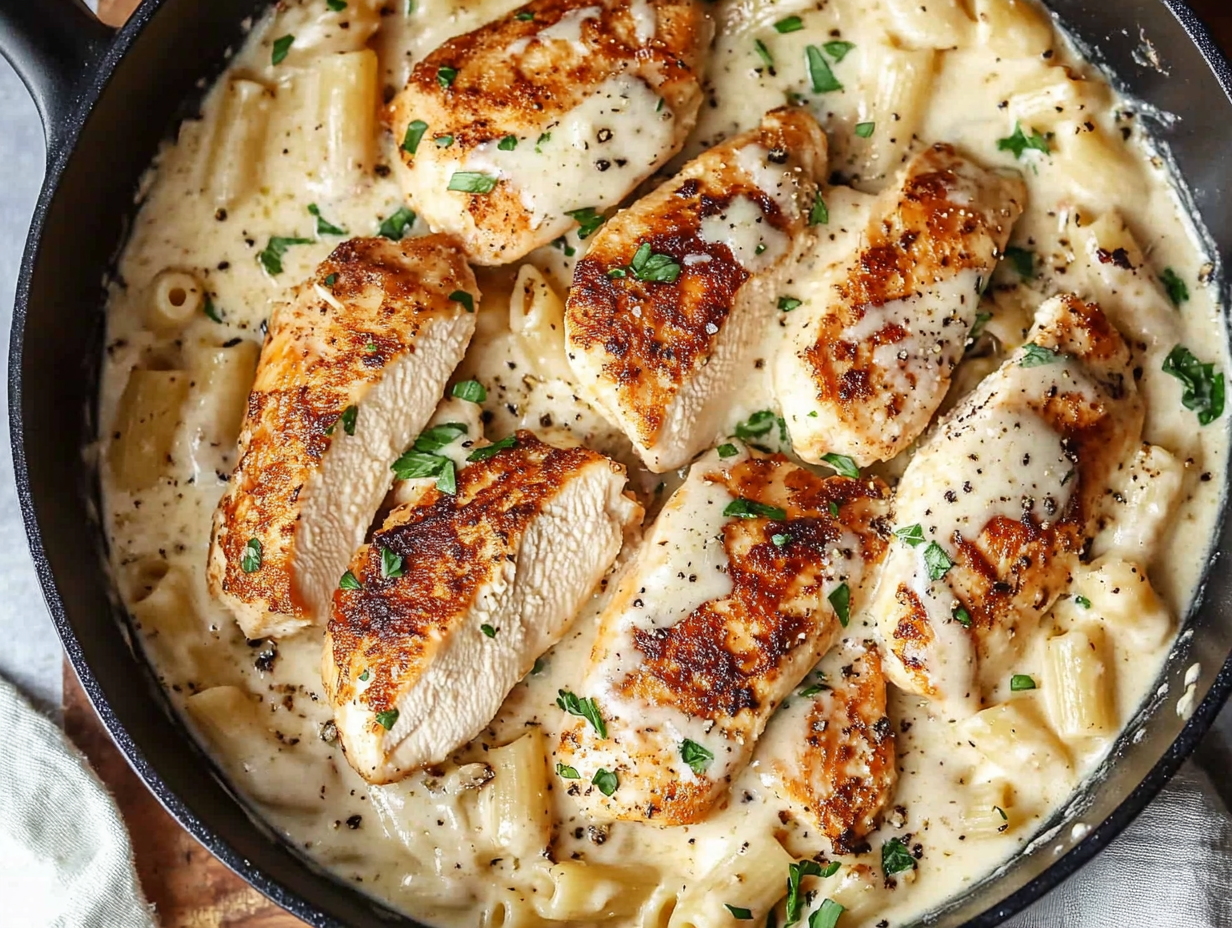
Garlic Parmesan Chicken Pasta is a classic, creamy pasta dish that’s both indulgent and easy to make. This meal brings together tender, juicy chicken and perfectly cooked pasta in a rich, garlic-infused Parmesan sauce that’s both comforting and satisfying. It’s a versatile recipe that suits various preferences and dietary needs, with options for gluten-free or dairy-free adjustments.
Why It’s a Popular Choice
This dish is popular for several reasons: it combines the rich, savory flavors of Parmesan and garlic with a creamy sauce that pairs perfectly with pasta and chicken. It’s the ultimate comfort food, appealing to all ages with a blend of spices, a touch of heat from red pepper flakes, and the balanced creaminess that comes from milk and cream. Its versatility makes it an ideal weeknight dinner or even a crowd-pleaser at gatherings.
Quick Overview of Key Ingredients
The main components of this dish are accessible and essential for creating its depth of flavor:
- Chicken: Adds protein and a hearty texture that complements the pasta.
- Pasta: Rigatoni or similar pasta is ideal, offering a robust base for the creamy sauce to cling to.
- Parmesan Cheese: Brings rich, nutty, and salty notes that enhance the overall flavor.
- Garlic: Adds a pungent yet aromatic taste, making the dish flavorful and fragrant.
Ingredients Overview
For the Pasta and Chicken
Choosing Rigatoni or other “shortcut” pasta like Penne or Rotini is ideal here because of its shape. The ridges and hollow centers of these types of pasta allow them to capture and hold the sauce, ensuring each bite is packed with flavor. Additionally, using gluten-free pasta is an easy way to make this dish gluten-friendly without sacrificing taste or texture.
Chicken Breast
Using chicken breast and pounding it to an even thickness ensures that it cooks uniformly. An even thickness allows for quicker cooking and reduces the chance of the chicken drying out, resulting in a tender and juicy texture. This step also helps the chicken absorb the seasoning better, enhancing its flavor.
Spices and Seasoning
The combination of oregano, paprika, garlic powder, sage, and red pepper flakes gives this dish a complex and layered flavor profile. Each spice adds a unique quality: oregano provides a slightly earthy, herbal taste; paprika adds warmth and depth; garlic powder enhances the garlic flavor; and sage introduces an aromatic element. Red pepper flakes contribute a subtle kick, making the dish more dynamic without overpowering the other flavors.
For the Sauce
The sauce is the heart of this recipe, made rich and creamy by butter, fresh garlic, milk, heavy cream, and Parmesan cheese. Fresh garlic brings a robust flavor and aroma that elevates the sauce. Parmesan adds a savory, nutty richness, while the combination of milk and cream creates a smooth and luxurious texture. This trio of ingredients forms a balanced, flavorful sauce that’s both creamy and savory.
For Garnish
A garnish of fresh parsley adds a pop of color and a subtle, fresh flavor, enhancing the visual appeal of the dish. Shaved Parmesan cheese adds a final layer of flavor, giving each serving an extra cheesy kick. Optional red pepper flakes on top add a hint of spice for those who enjoy a bit of heat in their pasta.

Step-by-Step Instructions
1️⃣ Cook the Pasta
Start by bringing a large pot of salted water to a rolling boil. Adding salt to the water seasons the pasta from within, which is essential for overall flavor. Add the pasta, such as Rigatoni, and cook according to package directions, aiming for an “al dente” texture — firm yet tender when bitten. This texture ensures the pasta holds its shape when mixed with the sauce. Just before draining, reserve about 1 cup of pasta water. This starchy water is valuable for adjusting the sauce consistency later, helping to create a smooth, cohesive sauce that clings perfectly to the pasta.
2️⃣ Prepare and Cook the Chicken
Marinating the Chicken
To infuse the chicken with flavor, toss it with olive oil, oregano, paprika, garlic powder, dried sage, red pepper flakes, salt, and pepper in a bowl. Olive oil serves as a base for the seasoning to adhere to the chicken, helping it brown evenly when seared. This seasoning blend gives the chicken layers of flavor, with herbs, a touch of warmth, and a slight kick from the red pepper flakes. Pounding the chicken breast to an even thickness is crucial, as it ensures the chicken cooks uniformly and remains juicy.
Searing the Chicken
Heat a deep skillet over medium-high heat. Adding the seasoned chicken to a hot skillet creates a golden, flavorful crust while locking in moisture. Sear the chicken for about 8-10 minutes, flipping halfway through. This technique enhances the flavor and texture, creating a satisfying bite in each slice. Maintaining medium-high heat is essential; if the pan is too hot, the chicken can burn on the outside while remaining undercooked inside. If you notice the chicken browning too quickly, adding a splash of water can help regulate the temperature.
Checking Doneness and Resting
Cook until the internal temperature of the chicken reaches 165°F (74°C), indicating it’s fully cooked and safe to eat. Let the chicken rest after cooking for a few minutes to allow the juices to redistribute, making it tender and juicy when sliced. Slice the chicken thinly, making it easy to serve over the pasta.
3️⃣ Make the Sauce
Browning Garlic in Butter
In the same skillet, melt the butter over medium heat. Add minced garlic and cook for about 1 minute, stirring constantly until fragrant. This brief cooking time is enough to release the garlic’s aroma and create a deeply flavored base for the sauce without burning it.
Whisking in the Flour
Sprinkle in the flour gradually while whisking to form a smooth paste, or “roux.” This step is essential for thickening the sauce. Whisking constantly prevents lumps and ensures the flour is well-incorporated, creating a velvety, cohesive sauce.
Adding Broth, Milk, and Cream
Slowly pour in the chicken broth while whisking, scraping up any browned bits on the skillet’s bottom. These bits add extra flavor to the sauce. Lower the heat to medium-low, then add the milk and heavy cream gradually, whisking constantly. This gentle heat prevents the sauce from curdling and allows it to thicken evenly as it simmers.
Adding Parmesan and Seasoning
Finally, stir in freshly grated Parmesan cheese, salt, and pepper. Parmesan adds depth and a savory, nutty flavor, while seasoning adjusts the sauce to taste.
Combining Pasta and Sauce
Once your sauce is smooth, creamy, and seasoned to taste, it’s time to bring everything together. Add the cooked pasta directly into the skillet with the sauce. Using tongs or a large spoon, gently toss the pasta to ensure each piece is well-coated. The pasta’s surface starch helps the sauce adhere, creating a cohesive, flavorful dish with every bite.
If the sauce appears too thick or doesn’t coat the pasta evenly, use the reserved pasta water to adjust the consistency. Start by adding a few tablespoons at a time, stirring well to incorporate. The starchy pasta water not only thins the sauce but also helps it cling better to the pasta, enhancing its creamy texture. Continue adding small amounts until the sauce reaches your desired thickness, whether you prefer it slightly thick or a bit looser.
For added flavor, consider mixing in extra red pepper flakes if you enjoy a spicier kick. Other optional adjustments could include a handful of fresh spinach for color and nutrition or sun-dried tomatoes for a hint of tangy sweetness. This final step allows you to customize the dish, making it uniquely yours and catering to your personal taste.
Detailed Article Outline for Garlic Parmesan Chicken Pasta
Serving Suggestions
How to Plate Pasta for the Best Presentation
For an appealing presentation, use a large, shallow serving bowl or individual plates. Place a generous scoop of the pasta in the center and neatly layer the sliced chicken on top. The contrast of creamy pasta with golden-brown chicken slices enhances visual appeal, while showcasing each element of the dish.
Optional Garnishes
Add a sprinkle of freshly chopped parsley for a burst of color and a subtle hint of freshness. A handful of shaved Parmesan adds a touch of sophistication and extra cheesy goodness, while a light dusting of red pepper flakes provides a pop of color and optional spice.
Pairing Ideas
Serve this creamy pasta with a fresh, crisp side salad to balance its richness. A classic Caesar or mixed greens salad works well. Additionally, a side of warm garlic bread complements the flavors and offers a crunchy texture. For a lighter vegetable option, serve with steamed broccoli or asparagus, which adds color and balance to the meal.
Tips for Success
Proper Chicken Preparation
To ensure the chicken cooks evenly, pound the breast to a uniform thickness. This step is essential as it allows the chicken to sear properly without parts becoming overcooked or dry. Even thickness also helps with marinating, allowing each piece to absorb flavor more effectively.
Pasta Cooking Tips
Cook pasta to an “al dente” texture, following the package instructions closely. Al dente pasta retains a slight firmness, preventing it from becoming mushy when combined with the sauce. Additionally, resist rinsing the pasta after cooking; the starch on the surface helps the sauce adhere better.
Creating a Smooth Sauce
When making the sauce, start by melting the butter and browning the garlic gently to release its aroma without burning. When adding flour, whisk constantly to create a smooth roux, which will prevent lumps. As you add broth, milk, and cream, keep the heat moderate and stir continuously to achieve a creamy consistency without any curdling.
Adjusting Flavor and Consistency
Taste the sauce and adjust the salt, pepper, and Parmesan as needed for balance. Use the reserved pasta water to control the sauce thickness, adding small amounts until you reach the desired texture. This method not only thins the sauce if necessary but also adds a slight starchy quality that enhances its creaminess and helps it cling to the pasta.
Garlic Parmesan Chicken Pasta
- Total Time: 45 mins
Description
This Garlic Parmesan Chicken Pasta is a creamy and delicious pasta dish made with juicy pan-seared chicken and a rich Parmesan sauce. It’s an easy, comforting meal perfect for any night of the week.
Ingredients
- For the Pasta and Chicken:
- 1 lb shortcut pasta (like Rigatoni, gluten-free if needed)
- 1 lb chicken breast, pounded to even thickness
- 2 tablespoons olive oil
- 2 teaspoons oregano
- 1 teaspoon paprika
- 2 teaspoons garlic powder
- 1 teaspoon dried sage
- 1/4 teaspoon red pepper flakes (or more to taste)
- Salt and pepper, to taste
- For the Sauce:
- 3 tablespoons unsalted butter (vegan butter if needed)
- 5 cloves garlic, minced
- 3 tablespoons flour (gluten-free if needed)
- 1/2 cup chicken broth
- 2 cups milk (any kind)
- 1/2 cup heavy cream
- 1 1/2 cups freshly grated Parmesan cheese
- Salt and pepper, to taste
- For Garnish:
- Fresh chopped parsley
- Shaved Parmesan cheese
- Red pepper flakes
Instructions
1️⃣ Cook the Pasta:
Bring a large pot of salted water to a boil. Add the pasta and cook according to package directions until al dente.
Reserve 1 cup of pasta water before draining. Set the pasta aside and do not rinse.
2️⃣ Prepare and Cook the Chicken:
In a bowl, toss the chicken breast with olive oil, oregano, paprika, garlic powder, dried sage, red pepper flakes, salt, and pepper.
Heat a deep skillet over medium-high heat. Add the seasoned chicken and pan-sear for 8-10 minutes, flipping halfway, until the chicken reaches an internal temperature of 165°F (74°C).
If the chicken begins to burn before fully cooking, add a tablespoon of water to the pan as needed. Remove the chicken from the pan and let it rest, then slice thinly.
3️⃣ Make the Sauce:
In the same skillet, melt the butter over medium heat. Add the minced garlic and cook for 1 minute, until fragrant.
Sprinkle in the flour and whisk to create a smooth paste, then slowly pour in the chicken broth while whisking, scraping up any browned bits on the bottom of the pan.
Reduce the heat to medium-low and add the milk and heavy cream, whisking constantly. Cook for 2-3 minutes until the sauce starts to bubble and thicken.
Add the Parmesan cheese, salt, and pepper to the sauce, stirring until the cheese melts and the sauce is smooth and creamy. Adjust salt and pepper to taste.
4️⃣ Combine with Pasta:
Add the cooked pasta to the sauce, tossing to coat evenly. Add the reserved pasta water a few tablespoons at a time as needed to reach your desired sauce consistency.
5️⃣ Serve:
Plate the pasta and top with sliced chicken. Garnish with additional Parmesan, parsley, and red pepper flakes if desired.
Notes
- Adjust the Sauce Consistency: Use the reserved pasta water to thin the sauce if it’s too thick.
- Use Fresh Parmesan: Freshly grated Parmesan will melt better into the sauce, creating a smoother, creamier consistency.
- Storage and Reheating: Store leftovers in an airtight container in the fridge for up to 3 days. Reheat gently on the stovetop or microwave, adding a splash of milk to loosen the sauce if needed.
- Prep Time: 15 mins
- Cook Time: 30 mins
