

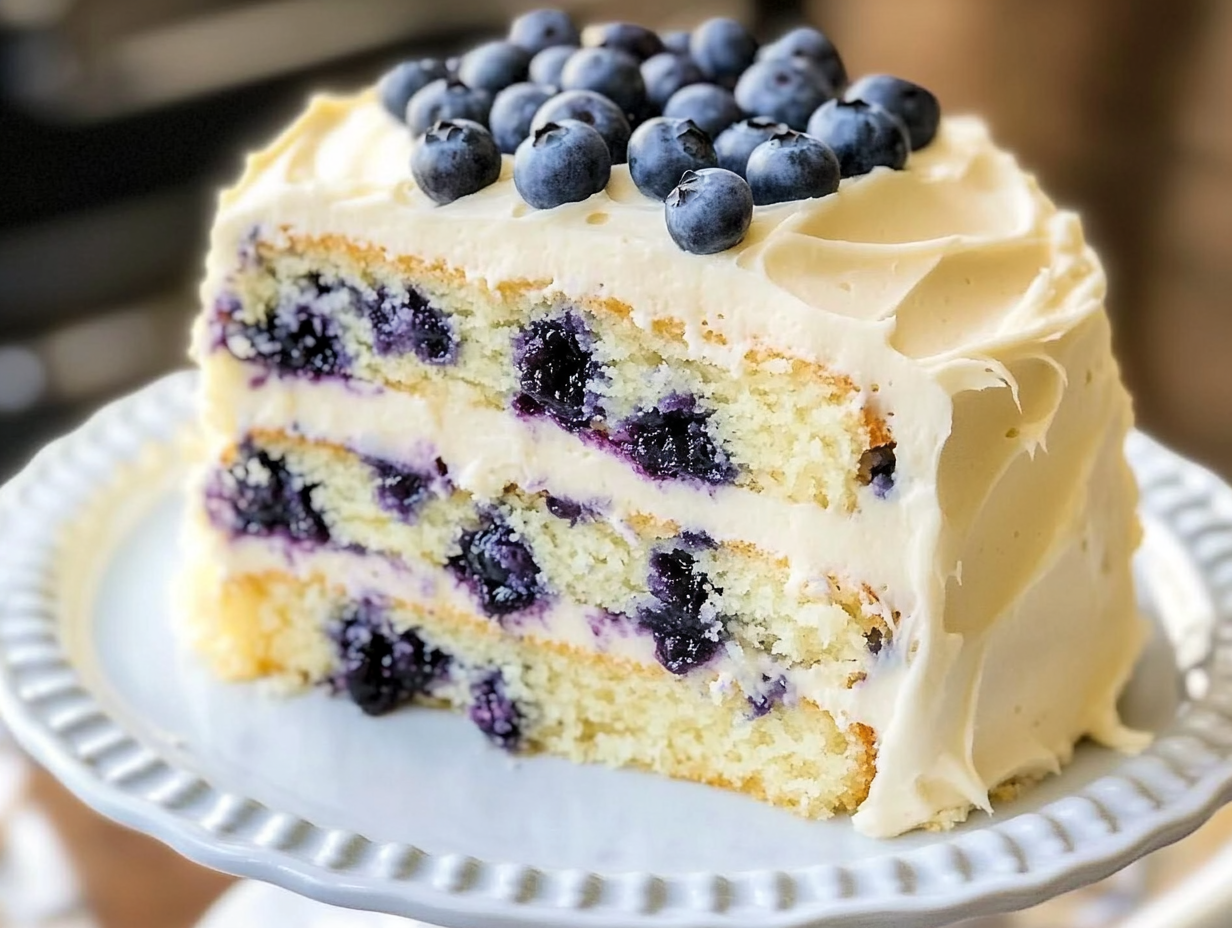
Lemon Blueberry Cake is a delightful, vibrant dessert that brings together the tangy flavor of fresh lemons with the sweet burst of blueberries. This cake offers a refreshing taste that’s perfect for spring and summer gatherings but also brings brightness to any occasion year-round. Its texture is soft, moist, and tender, making each bite a satisfying blend of light citrusy sweetness with the juicy pop of blueberries. The cake is often finished with a creamy lemon frosting that complements the cake’s flavors, adding a touch of richness that perfectly balances the zesty and fruity notes.
This cake has grown in popularity as a refreshing and elegant dessert option because it provides a pleasant contrast to richer, heavier cakes. The combination of lemon and blueberries feels natural and refreshing, appealing to those who enjoy fruit-based desserts that aren’t overly sweet. It’s versatile enough for a range of settings: it can be the centerpiece at a festive brunch, an afternoon tea, or even a casual family get-together. Whether enjoyed as a simple cake or decorated for a special occasion, Lemon Blueberry Cake stands out as a crowd-pleasing choice that’s both eye-catching and delicious.
Ingredients Breakdown
Each ingredient in a Lemon Blueberry Cake plays a crucial role in achieving the perfect flavor, texture, and structure.
- Flour: The all-purpose flour provides the cake’s primary structure, giving it the strength to hold together without being overly dense. Flour is essential in balancing the cake’s moisture and helping it rise.
- Granulated Sugar: Sugar adds sweetness, but it also contributes to the cake’s texture. When sugar dissolves in the batter, it retains moisture and helps create a tender crumb.
- Cornstarch: Added alongside flour, cornstarch softens the cake’s texture by reducing gluten formation, resulting in a tender crumb that’s characteristic of a light cake.
- Baking Powder and Baking Soda: These leavening agents work together to give the cake lift. Baking powder provides the main rising power, while baking soda helps balance the acidity from the lemon juice and buttermilk, creating a light, fluffy texture.
- Table Salt: Just a small amount of salt enhances and balances the flavors, keeping the cake from tasting overly sweet or flat.
- Butter and Oil: This recipe uses a combination of butter and oil for optimal moistness and flavor. Butter adds a rich, creamy taste, while oil contributes to a soft, moist crumb that stays tender even after chilling.
- Buttermilk: Buttermilk brings a slight tang and richness to the cake, enhancing its moistness and working with the baking soda for a light texture.
- Lemon Zest and Juice: Fresh lemon zest and juice are essential for the bright, zesty flavor of the cake. Zest adds concentrated citrus notes, while the juice brings acidity to balance the sweetness.
- Eggs: Eggs bind the ingredients, adding richness and helping the cake hold its structure while staying soft and airy.
- Vanilla Extract: Vanilla complements the lemon flavor, adding depth to the overall taste.
- Blueberries: Fresh blueberries are preferred for their vibrant color and burst of flavor. They also add a beautiful visual appeal that makes each slice inviting.
Recommended Equipment and Preparation Tips
For a successful Lemon Blueberry Cake, having the right equipment and preparation steps is key.
- Essential Equipment: You’ll need three 8” round cake pans, an electric mixer, mixing bowls, and parchment paper. The three pans allow for even, consistent layers, while a mixer ensures a smooth batter.
- Pan Preparation: Greasing, flouring, and lining each pan with parchment paper prevents sticking, making it easier to remove the cakes after baking. This extra step ensures clean, professional-looking layers.
- Zesting and Juicing Tips: For the best lemon flavor, zest the lemons before juicing them. A microplane grater works well for zesting, and rolling the lemons on a countertop before juicing can help release more juice. Using fresh lemons ensures a bright, natural flavor that complements the blueberries perfectly.

Step-by-Step Instructions with Techniques and Tips
Preheating and Preparing the Pans
Preheating the oven to 350°F (175°C) before starting ensures even baking from the moment the cake goes in, which helps maintain a consistent texture. To prepare the cake pans, begin by greasing the sides with butter or oil spray, making sure to cover all surfaces to prevent sticking. Dust the greased surfaces lightly with flour, tapping out any excess. Finally, place a round of parchment paper in the bottom of each pan. This extra layer of parchment paper ensures that the cake releases smoothly after baking, preserving the cake’s shape and making it easier to stack layers.
Mixing the Dry Ingredients
In a large mixing bowl, combine the flour, granulated sugar, cornstarch, baking powder, baking soda, and salt. Whisk the ingredients together thoroughly, ensuring they are evenly distributed to prevent clumping. Properly mixed dry ingredients lead to a more consistent batter, reducing the risk of uneven pockets of flour or leavening agents. This uniform distribution is key to creating a cake with a tender, consistent crumb throughout. By whisking at this stage, you introduce a bit of air into the dry mixture, which helps with the cake’s rise. Thorough mixing also makes it easier to incorporate the butter and other wet ingredients in later steps, reducing the chances of overmixing, which can lead to a dense texture.
Adding the Butter
Using room temperature butter is crucial for this step, as it ensures even blending with the dry ingredients. With an electric mixer on low speed, add the softened butter one tablespoon at a time, allowing each piece to be fully mixed in before adding the next. The goal is to achieve a sandy texture, where the butter coats the flour particles, creating a tender, crumbly foundation. This step is similar to creating a pie crust and helps prevent gluten formation. The butter’s coating effect adds a richness to the cake while maintaining a soft crumb. Taking the time to blend each butter piece evenly keeps the mixture light and well-aerated, which will contribute to a fluffy texture in the final cake.
Adding the Oil
With the mixer on low, slowly drizzle the oil into the butter-flour mixture. Adding the oil gradually ensures it’s fully incorporated without making the batter too heavy. Oil contributes moistness to the cake, helping keep the texture tender and soft even after chilling. Unlike butter, which can firm up in the fridge, oil remains liquid at colder temperatures, so the cake stays moist for longer. Adding oil at this stage, after the butter, allows the cake to benefit from the flavor of butter and the moisture-retaining properties of oil for the best of both worlds.
Preparing the Wet Ingredients
In a separate bowl, whisk together the buttermilk, lemon zest, lemon juice, eggs, and vanilla extract until smooth. It’s essential to whisk these ingredients thoroughly, as a well-blended wet mixture helps create a consistent texture when added to the dry ingredients. Fresh lemon juice and zest are preferred over bottled alternatives, as they provide a brighter, more natural lemon flavor. The buttermilk’s acidity also reacts with the baking soda, adding lightness to the cake. The eggs should be at room temperature, as this allows them to blend more easily with the other wet ingredients, helping create a homogenous batter. This well-whisked mixture ensures that the final batter is smooth and flavorful, setting the stage for a cohesive texture in the cake.
Combining Wet and Dry Ingredients
With the mixer on low speed, slowly pour the wet mixture into the butter-flour mixture. Mixing on low helps to avoid overmixing, which could lead to a denser cake. Start by adding a third of the wet ingredients, then mix until just combined. Repeat with the remaining wet ingredients in two batches. This staged mixing process helps prevent lumps and ensures an even, smooth batter. As the wet ingredients incorporate, they hydrate the dry ingredients without overworking the gluten, which can toughen the cake. Take care to scrape down the sides of the bowl occasionally to ensure all ingredients are well-blended. Stop mixing as soon as the batter is smooth, with no visible streaks of flour. Overmixing at this stage can make the cake too dense, so aim for a gentle, steady mixing approach to achieve a batter that is light and airy, yet well-integrated.
Adding the Blueberries
Gently fold in the blueberries with a spatula rather than mixing them in with the mixer. Folding minimizes the risk of bruising or bursting the blueberries, which could turn the batter purple. Start by coating the blueberries lightly with flour; this helps prevent them from sinking to the bottom of the batter during baking. Use a gentle, sweeping motion to fold, lifting the batter from the bottom to distribute the blueberries evenly. This folding technique helps ensure that each slice of cake will have an even distribution of blueberries. Avoid stirring too vigorously, as it can break down the berries and release juices, altering the color and texture of the cake.
Dividing and Baking
Evenly divide the batter among the three prepared cake pans, using a kitchen scale if possible to ensure equal amounts in each pan. This ensures that each layer will bake at the same rate and that the layers will be uniform for stacking. Smooth the tops of each pan with a spatula to encourage even rising. Bake the cakes at 350°F (175°C) for approximately 30 minutes. Check for doneness by gently pressing the surface of each cake—if it springs back, it’s ready. Additionally, insert a toothpick in the center; if it comes out mostly clean with a few moist crumbs, the cakes are fully baked. If your oven cannot accommodate all three pans at once, bake in batches to prevent overcrowding. If all pans fit, consider rotating them halfway through to promote even baking across each layer, especially if your oven has hot spots.
Cooling the Cakes
After baking, allow the cakes to cool in their pans for 10-15 minutes. This partial cooling period helps prevent the cakes from cracking when removed from the pans. Run a knife along the edges of each cake to loosen, then carefully invert them onto cooling racks. Let the cakes cool completely before frosting, as even slight warmth could cause the frosting to melt. Ensuring the cakes are fully cool will make it easier to frost them cleanly and helps the frosting set well between layers.
Frosting and Serving
Once the cakes are completely cooled, layer and frost them with your choice of lemon frosting or another preferred frosting. Place the first layer on a cake stand or plate, spread an even layer of frosting over it, then stack the next layer. Repeat with the final layer. Use an offset spatula for smooth, even frosting coverage on top and around the sides. For a decorative touch, consider adding lemon zest, a few blueberries, or edible flowers. When serving, slice with a sharp knife to reveal the beautiful layers and berry-speckled interior. The cake’s bright, zesty flavor makes it perfect for a wide range of settings, from a casual brunch to a special celebration, where its presentation and taste are sure to impress.
Frequently Asked Questions
Can I use frozen blueberries?
Yes, frozen blueberries can be used, but there are some trade-offs. Frozen berries may release more juice than fresh ones, potentially adding moisture to the batter and slightly altering the cake’s color. To help reduce this effect, rinse frozen blueberries under cold water until the water runs clear, then dry them before folding into the batter. This helps minimize the purple streaking that can occur with frozen berries.
Can I make this cake gluten-free?
Yes, you can substitute a gluten-free all-purpose flour blend for regular flour. Look for a blend that includes xanthan gum or another binder, as this will help maintain the cake’s structure and texture. Keep in mind that gluten-free cakes can sometimes be a bit denser, so consider using additional leavening (e.g., a touch more baking powder) if needed.
Can I use lemon extract instead of fresh lemons?
While lemon extract can add lemon flavor, it lacks the brightness and natural acidity of fresh lemon juice and zest. Fresh lemons provide a more vibrant, true-to-nature taste, but if using extract, start with a small amount (around ½ teaspoon) to avoid an artificial flavor.
How should I store the cake?
Store the cake in an airtight container in the refrigerator for up to 4-5 days. Refrigeration helps maintain the cake’s freshness and prevents spoilage, especially with fresh fruit in the batter.
Can I freeze this cake?
Yes, you can freeze Lemon Blueberry Cake. Wrap each unfrosted cake layer tightly in plastic wrap and place in a freezer-safe bag. Freeze for up to 2 months. When ready to serve, thaw layers at room temperature and frost as desired.
Lemon Blueberry Cake
- Total Time: 50 mins
Description
This Lemon Blueberry Cake is a moist, flavorful dessert bursting with fresh blueberries and zesty lemon. It’s perfect for special occasions, or whenever you’re craving a refreshing, fruity cake with a touch of tanginess.
Ingredients
- 3 cups (375 g) all-purpose flour
- 1 ½ cups (300 g) granulated sugar
- 1 Tablespoon cornstarch
- 2 teaspoons baking powder
- ½ teaspoon baking soda
- ½ teaspoon table salt
- ½ cup (113 g) unsalted butter, softened and cut into 8 pieces
- ½ cup (120 ml) canola, vegetable, or avocado oil
- ¾ cup (180 ml) buttermilk
- 2 Tablespoons lemon zest (zest lemons before squeezing)
- ¼ cup (60 ml) lemon juice, preferably fresh-squeezed
- 4 large eggs, room temperature preferred
- ½ teaspoon vanilla extract
- 2 ½ cups (340 g) blueberries (about 12 oz; fresh preferred)
- 1 batch lemon frosting (or preferred frosting)
Recommended Equipment:
- Three 8” round cake pans
- Mixing bowls
- Electric mixer
Instructions
1️⃣ Preheat the Oven
Preheat your oven to 350°F (175°C). Prepare three 8” round cake pans by greasing and flouring the sides, then lining the bottoms with parchment paper. Set aside.
2️⃣ Mix the Dry Ingredients
In a large mixing bowl, whisk together the flour, granulated sugar, cornstarch, baking powder, baking soda, and salt until well combined.
3️⃣ Add the Butter
Using an electric mixer, add the softened butter to the dry mixture, one tablespoon at a time. Wait until each piece of butter is fully mixed in before adding the next. The mixture should take on a sandy texture.
4️⃣ Add the Oil
While the mixer is on low speed, slowly drizzle in the oil, mixing until fully incorporated.
5️⃣ Prepare the Wet Ingredients
In a separate bowl, whisk together the buttermilk, lemon zest, lemon juice, eggs, and vanilla extract until smooth and combined.
6️⃣ Combine Wet and Dry Ingredients
With the mixer on low speed, slowly add the buttermilk mixture to the batter, mixing until smooth and fully combined.
7️⃣ Add the Blueberries
Use a spatula to gently fold in the blueberries, ensuring even distribution throughout the batter.
8️⃣ Divide and Bake
Evenly divide the batter between the prepared cake pans. Transfer to the oven and bake for 30 minutes or until the surface of the cakes springs back when lightly touched and a toothpick inserted into the center comes out mostly clean with a few moist crumbs.
Note: If your oven cannot hold all three pans, bake them in batches. If all pans do fit, rotate them halfway through baking for even cooking.
9️⃣ Cool the Cakes
Let the cakes cool in their pans for 10-15 minutes. Then, run a knife along the edges to loosen, and carefully invert each cake onto a cooling rack. Allow cakes to cool completely before frosting.
🔟 Frost and Serve
Once the cakes are fully cooled, layer and frost them with lemon frosting or your preferred frosting. Decorate as desired and enjoy!
Notes
- Blueberry Tips: Fresh blueberries work best for this recipe. If using frozen blueberries, do not thaw them before folding into the batter.
- Lemon Frosting: A homemade lemon frosting enhances the citrus flavor of this cake. Try a simple lemon buttercream or a cream cheese lemon frosting.
- Storage: This cake can be stored in an airtight container at room temperature for up to 2 days or refrigerated for up to 5 days.
- Prep Time: 20 mins
- Cook Time: 30 mins
